
Sensori Neurotech
Stress recovery,
built into everyday life.
Our mission is to make personalised stress recovery part of everyday life. Grounded in neuroscientific research, Sensori Neurotech provides the physical infrastructure that helps organisations proactively fulfil their duty of care on psychosocial risks and stress prevention.
Research-driven · Privacy-first · Made for people
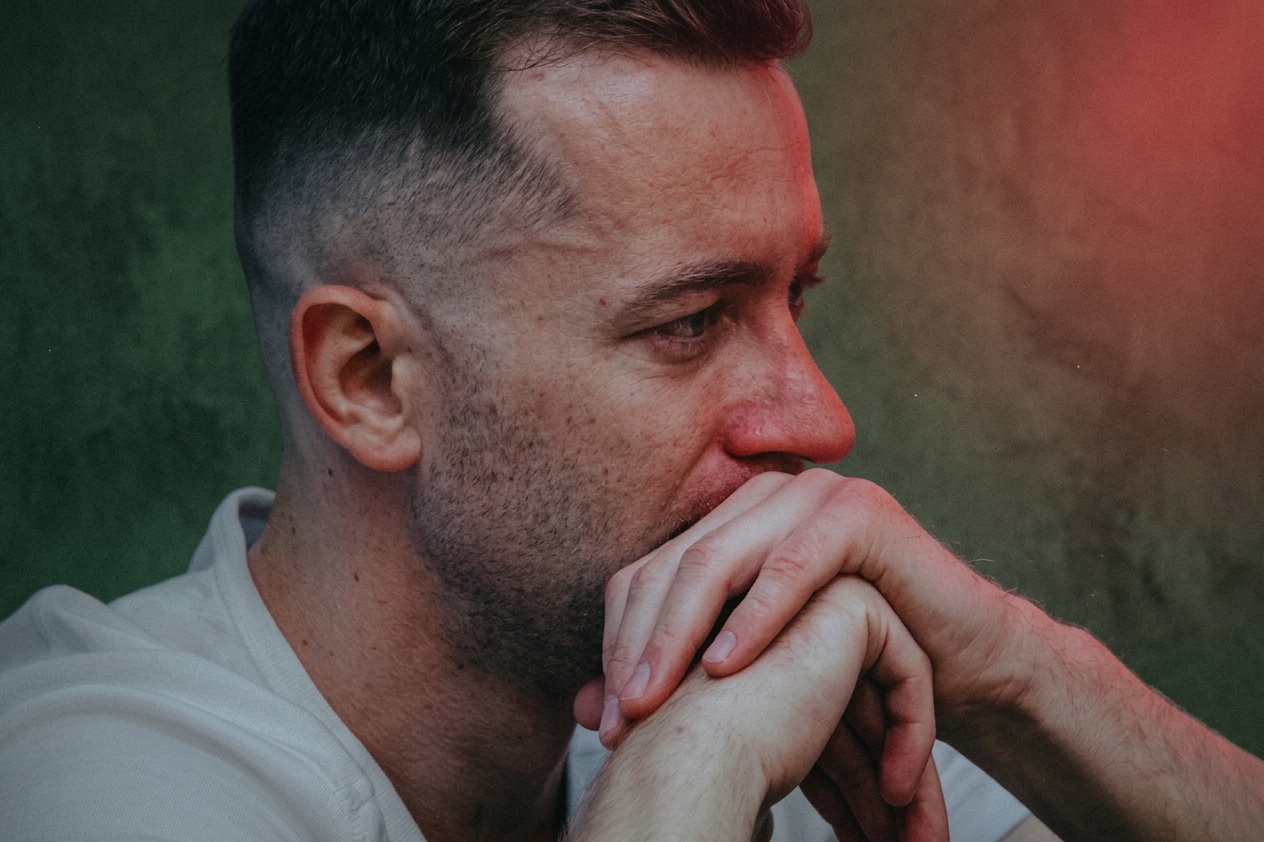
40%
The challenge
of society is at risk of burnout
Mental exhaustion is widespread. Adults, older people and even children are under pressure about their future, achievements and appearance. More people now recognise themselves as neurodivergent. Yet most shared environments are still designed as if everyone processes stimulation the same way. For employers, this is no longer a soft topic, as they are now expected to proactively map psychosocial risks and take concrete prevention measures.
Read the studies
Why current tools fall short
Silence alone isn't recovery.
Wellness apps
Up to 95% of users abandon them within 30 days.
Privacy booths
They block out noise, but do nothing about the stress itself.
Both manage symptoms
They soften the effects of overstimulation, but leave the cause untouched.
Recovery needs a place
People need time to actually recover, close to where they work or learn.
Not a structural measure
Pleasant to have, but hard to count as a step in a prevention policy.

Our research
Light, warmth and sound,
carefully dosed.
We study how daylight-tuned light, warmth, sound, touch and vibration help the body calm down after stress. What we learn goes into recovery spaces that respond to the person inside while the session runs.
Carefully dosed
Light, warmth and sound adjust to your breathing and heart rhythm as the session runs.
Based on research
Each method is based on published, peer-reviewed studies.
Personal
The session follows how your body responds, not an average.
Our environments
SensoriPod.
Time to recover,
a calmer mind.
SensoriPod is a smart, autonomous recovery space designed for offices and public buildings. Inside, the pod guides you through a short session by voice, without anyone else involved, so you can recover from stress and get back to your day with a clearer head.
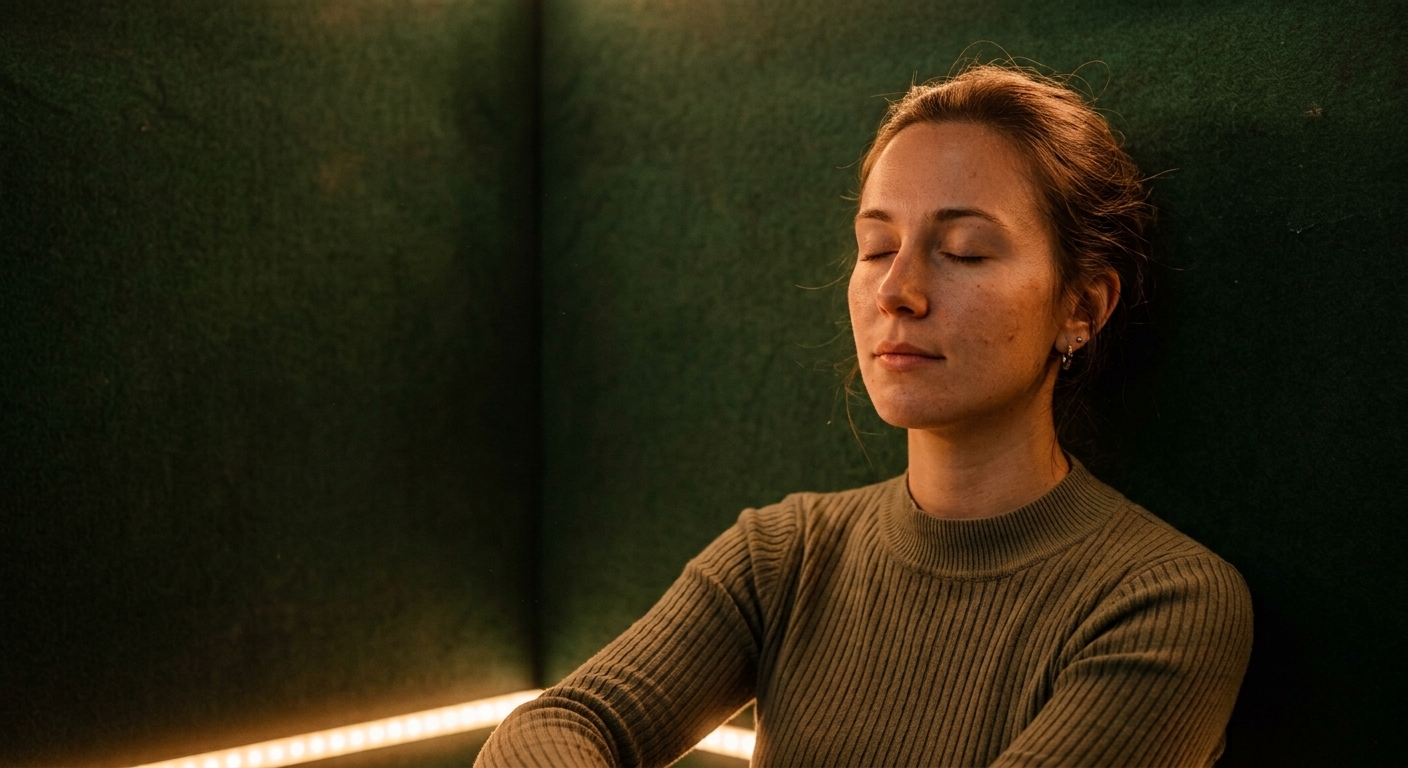
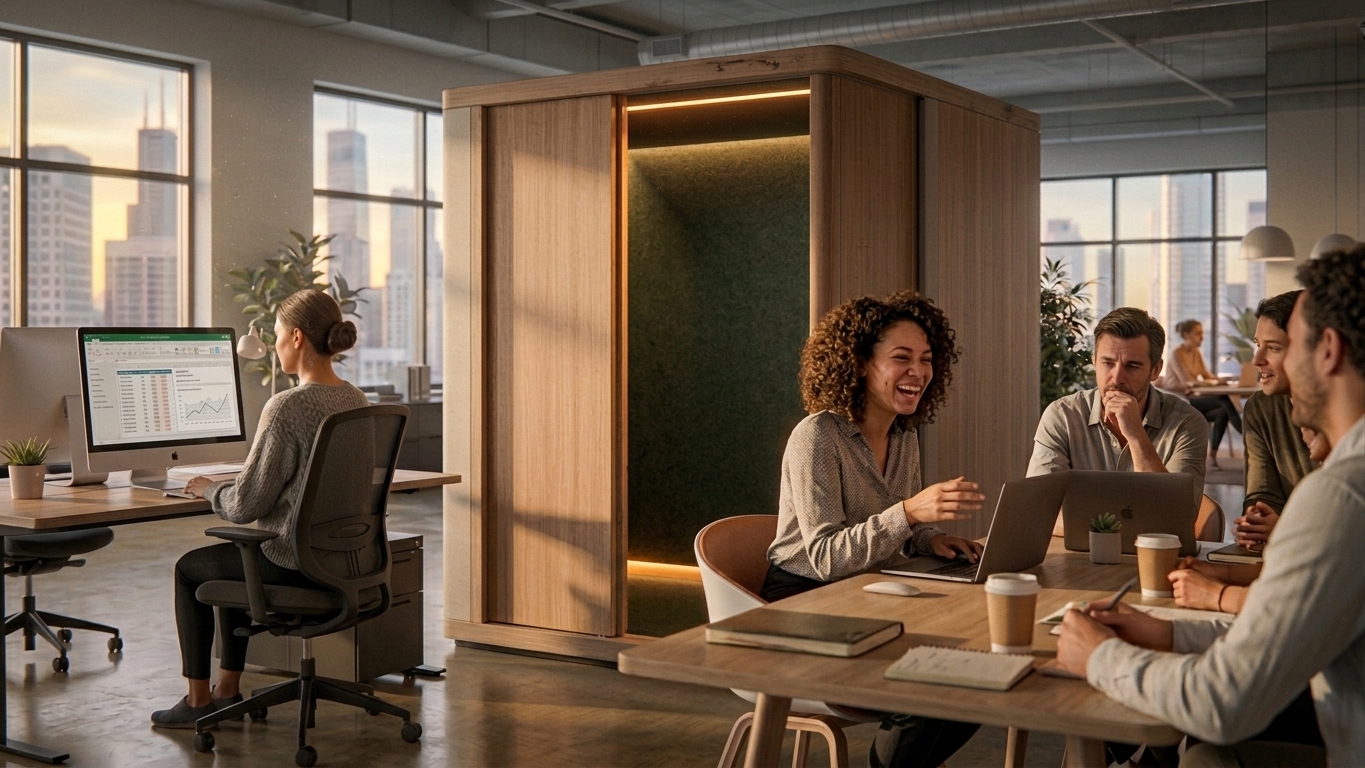 The environmentThe experience12min · tailored to your breathing and heart rhythm
Tuned to your body
Contactless sensors follow your breathing and heart rhythm. Light, sound, warmth and gentle vibrations move along with you and slow down as you do. You wear nothing, and nothing is stored.
Fits in your space
SensoriPod drops into your existing space and is ready within hours. People can take a break right where they work or learn.
Privacy by design
No camera recognition and no emotion detection. Your breathing and heart rate data stays in the pod. Your prevention advisor only sees anonymous totals.
Concrete measures
A visible step in your wellbeing policy. Noise and harsh light stay outside, and people get a real break as part of stress prevention.
Insight
Figures for your prevention policy
A prevention measure only helps if people use it, so you want to know whether they do. SensoriPod gives your prevention advisor objective totals: how often the pod is used, at what times, and what users themselves answer to a short question before and after their session. Personal measurements and individual results stay in the pod.
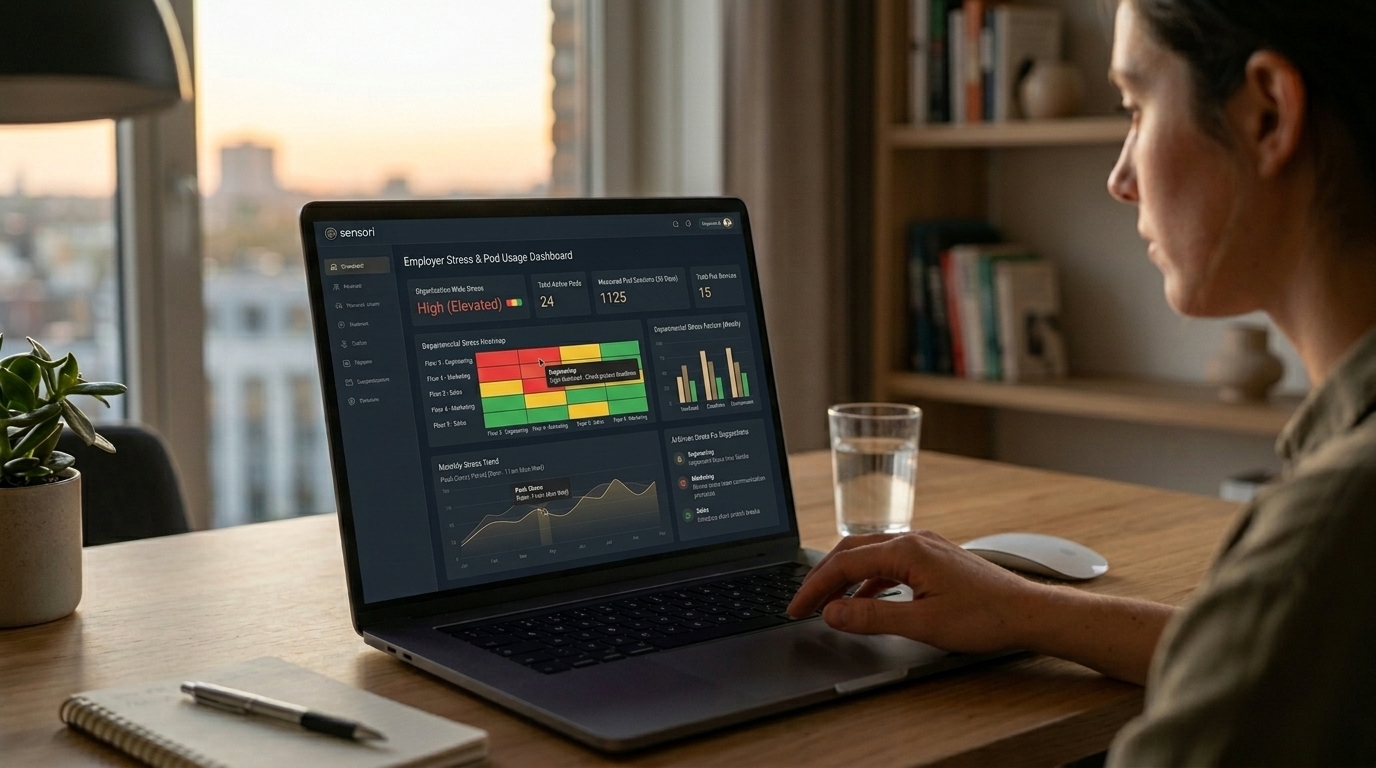
See when people need a break
Sessions per week and per time slot show when pressure builds, for example late in the afternoon or around deadlines.
Hear what users say
Before and after each session the pod asks short questions. Answering is optional. You see the anonymous percentages, for example how many users felt better afterwards.
Ready for your prevention advisor
Reports fit your psychosocial risk analysis, annual action plan and discussions with your health and safety committee.

Intended impact
Healthier headspace,
for everybody
We want to help prevent long-term absence and make busy, noisy buildings easier to cope with, for neurodivergent people and everyone else.
More inclusive workplaces
People process noise and pressure differently. A place to recover helps more of them keep working.
Lower absenteeism
Designed to help keep short stress-related absence from becoming long-term, as part of a broader prevention policy.
Made for society
From offices to hospitals and public buildings.
Questions
What organisations ask us.
How much space and installation does a SensoriPod need?
It fits in an existing office or meeting room and can be set up within hours. No renovation needed.
What happens to the data of people who use it?
Nobody needs a phone, app or login. The pod adapts on the spot, and body measurements and individual results never leave it. Your prevention advisor only sees anonymous totals.
Is SensoriPod a medical device?
No. It's a recovery space that supports your broader prevention policy. It doesn't diagnose or treat, and it doesn't replace a psychosocial risk analysis.
What does a pilot look like?
SensoriPod is in its validation phase. For a pilot we agree in advance on the location, the period and your questions, then look at the results together with you.